

 Français
  Deutsch
  Українська
Kredyt ekologiczny is one of the most practical funding instruments for Polish SMEs that want to reduce energy consumption, modernise infrastructure, and finance ecological investment without treating sustainability as a purely regulatory obligation. It is part of the Fundusze Europejskie dla Nowoczesnej Gospodarki 2021-2027 programme and is implemented through Bank Gospodarstwa Krajowego, known as BGK.
For small and medium-sized enterprises, this instrument is attractive because it combines bank financing with public support. However, it is also frequently misunderstood. Kredyt ekologiczny is not a simple grant paid directly to the company. It is a bank credit supported by an ecological premium, which repays part of the capital of the credit used for eligible investment costs. That makes it different from a standard subsidy and different from an ordinary commercial loan.
The programme is especially relevant in 2026 because recent calls have shown very high demand. In the fourth call, entrepreneurs submitted 678 applications, requested more than PLN 2.2 billion in support, and declared investment costs above PLN 4.1 billion. The available allocation was PLN 350 million, which means that requested support exceeded the available amount more than six times. For SMEs, the message is clear: formal eligibility is not enough. A strong project must be energy-efficient, financially credible, technically documented, and competitive.
What is Kredyt ekologiczny?
Kredyt ekologiczny is a funding mechanism for ecological investment in enterprises operating in Poland. Its purpose is to support the modernisation of existing infrastructure, including buildings, machinery, equipment, installations, and technological lines. The key programme requirement is that the investment should reduce primary energy consumption in the modernised area by at least 30 percent compared with the current level.
This requirement is central. A company cannot treat the programme as a general source of money for replacing old equipment. The investment must be justified through energy savings, and those savings must be demonstrated in an energy audit. The audit is not a formality. It defines the baseline, the planned modernisation, the expected energy reduction, and often the competitive strength of the project.
The support is provided in the form of an ecological premium. In practice, the company obtains a credit from a bank cooperating with BGK. After the project is approved and implemented according to the rules, the ecological premium repays part of the capital of that credit. This structure creates a three-part logic: the company must satisfy the bank, BGK, and the energy-efficiency requirements.
Why Kredyt ekologiczny matters for Polish SMEs
Energy costs, outdated equipment, inefficient buildings, and pressure to reduce emissions are no longer abstract issues for small business. For many SMEs, energy efficiency directly affects operating costs, competitiveness, resilience, and long-term investment planning. Kredyt ekologiczny is important because it can help transform an energy problem into an investment project supported by EU funds.
The instrument is particularly relevant for companies with existing assets that consume too much energy. This can include production facilities, service premises, warehouses, industrial halls, process lines, heating systems, cooling systems, lighting, building envelopes, and energy installations. The programme can also be useful for businesses that want to combine lower energy consumption with higher production quality, more stable operations, or better compliance with environmental expectations.
At the same time, Kredyt ekologiczny should not be presented as easy money. It requires creditworthiness, technical documentation, an energy audit, eligible costs, a realistic implementation plan, and a coherent financing structure. This makes it a good fit for SMEs that are ready to prepare a serious investment project, not for companies looking for quick, unsecured public support.
Table 1. How Kredyt ekologiczny works for Polish SMEs
| Element | What it means in practice | Why it matters |
|---|---|---|
| SME or eligible enterprise | The applicant must operate in Poland and meet the relevant enterprise-size rules | Eligibility starts with company status, but does not end there |
| Bank credit | The investment is financed through a credit from a bank cooperating with BGK | The company must prove creditworthiness and obtain a credit promise or conditional agreement |
| Ecological premium | Public support repays part of the capital of the ecological credit | The support is linked to the credit structure, not paid as a simple upfront grant |
| Energy audit | The audit confirms current consumption and expected savings | It is the technical foundation of the application |
| Minimum energy saving | The modernised area must achieve at least 30 percent reduction in primary energy consumption | Without this result, the project does not fit the programme logic |
| Eligible investment costs | Costs must be directly linked to the ecological investment | The budget must prove necessity, eligibility, and proportionality |
.jpg)
Who can apply?
Kredyt ekologiczny is available to enterprises conducting business activity in Poland. The instrument is addressed to micro, small, and medium-sized enterprises, and it can also apply to selected larger categories such as small mid-caps and mid-caps, depending on the programme rules. For the core audience of i-grants.com, the most relevant group is Polish SMEs planning energy-efficiency investment.
The applicant must also have creditworthiness. This is a crucial difference from many grant schemes. A company may have an excellent ecological idea, but if it cannot obtain a credit promise from a cooperating bank, it will not be able to submit a complete and competitive application. Bank readiness is therefore not a separate administrative issue. It is part of the grant strategy.
An SME should also verify whether the planned investment concerns existing infrastructure. Kredyt ekologiczny is intended for modernisation. The programme is not designed to finance unrelated expansion or ordinary business growth without a clear energy-efficiency effect. The project should show how the current energy situation will change after implementation and why the planned investment is necessary to achieve that result.
What can Kredyt ekologiczny finance?
Eligible costs depend on the call documentation, the investment type, the location, the company size, and the applicable aid rules. In general, support may cover costs connected with the ecological investment. These may include fixed assets, construction works and materials, intangible assets such as patents, licences, know-how and other intellectual property rights, as well as studies, expert opinions, concepts and technical designs prepared by external advisers and connected with the implementation of the project.
The minimum eligible cost value is PLN 2 million. The maximum eligible cost value is the equivalent of EUR 50 million. The level of support may range from 15 to 80 percent, depending on the type of cost, enterprise size, and investment location. This does not mean that every applicant can receive the maximum level. The actual support intensity must be calculated according to the project structure and applicable aid rules.
Table 2. Eligible costs and evidence needed in Kredyt ekologiczny
| Cost area | Possible eligible use | Evidence expected |
|---|---|---|
| Machinery and equipment | Replacement or modernisation of energy-intensive assets | Technical parameters, quotations, energy-saving logic, link with the audit |
| Buildings and construction works | Thermal modernisation, building upgrades, installation works | Technical design, construction scope, energy audit, cost estimates |
| Technological lines | Replacement or improvement of production or service processes | Baseline consumption, expected savings, process description, supplier documentation |
| Intangible assets | Licences, patents, know-how, software or technical rights connected with the investment | Ownership or access rights, necessity for the project, valuation logic |
| Expert studies and technical designs | External documentation supporting the investment | Scope of advisory work, link with implementation, deliverables |
| Energy audit | Confirmation of baseline and expected reduction of primary energy consumption | Audit methodology, audited area, assumptions, consistency with the budget |
A strong budget should not look like a list of desired purchases. Each cost must be connected with the energy-efficiency objective. If the investment includes new machinery, the application should explain how the machinery reduces primary energy consumption in the modernised area. If the project includes construction works, the application should show how those works affect energy performance. If the project includes expert documentation, it should be clear why that documentation is necessary for implementation.
The ecological premium is not a normal grant
The ecological premium is the feature that makes Kredyt ekologiczny attractive, but also the source of many misunderstandings. The company does not simply receive a grant for any green investment. It first has to secure the bank credit and then apply for support connected with that credit. The premium repays part of the capital of the credit used for eligible costs.
This means that the company must think like both a grant applicant and a borrower. From the grant perspective, the project must satisfy the programme objectives, eligible cost rules, energy-saving requirement, documentation standards, and evaluation logic. From the bank perspective, the company must demonstrate repayment capacity, financial stability, and acceptable risk.
This dual structure can be an advantage for well-prepared SMEs. A company with a strong investment plan, reliable energy audit, and good financial position can use the instrument to reduce the final burden of a major modernisation project. However, the same structure can become a problem for companies that focus only on the grant and approach the bank too late.
The role of the energy audit
The energy audit is one of the most important documents in Kredyt ekologiczny. It defines the current energy consumption, the modernised area, the planned measures, and the expected savings in primary energy. Since the programme requires at least 30 percent reduction in primary energy consumption in the modernised area, the audit must support this result in a credible way.
The audit also affects competitiveness. In previous calls, BGK indicated that among projects meeting mandatory criteria, ranking could depend on the ratio of primary energy savings in megawatt-hours to eligible costs in Polish zlotys. This means that the audit can influence not only whether the project is technically acceptable, but also how strong it is compared with other projects.
A weak audit can damage the whole application. Problems may appear when the audited area does not match the investment scope, when the expected savings are not realistic, when the budget includes items that do not support the audited result, or when technical assumptions are too general. For this reason, the energy audit should be prepared early and coordinated with the investment plan, the budget, the bank process, and the application narrative.
Bank financing strategy
A company applying for Kredyt ekologiczny must work with a bank cooperating with BGK. This is not a detail that can be solved after submission. The credit promise or conditional credit agreement must be prepared in time and attached to the application when required. A promise from a bank outside the official cooperating group is not enough.
The bank’s role is also more than issuing a document. Each bank may have its own internal risk assessment, required financial documents, collateral expectations, processing time, pricing, and approach to ecological investment. Two banks can assess the same company differently. For this reason, the choice of bank should be part of the preparation strategy, not an afterthought.
An SME should start the bank conversation before the grant deadline becomes urgent. The bank may need time to review financial statements, planned investment costs, cash flow, collateral, credit history, ownership structure, and the company’s ability to manage the project. If the bank process begins too late, the company may not be able to obtain the necessary promise on time, even if the ecological investment itself is strong.
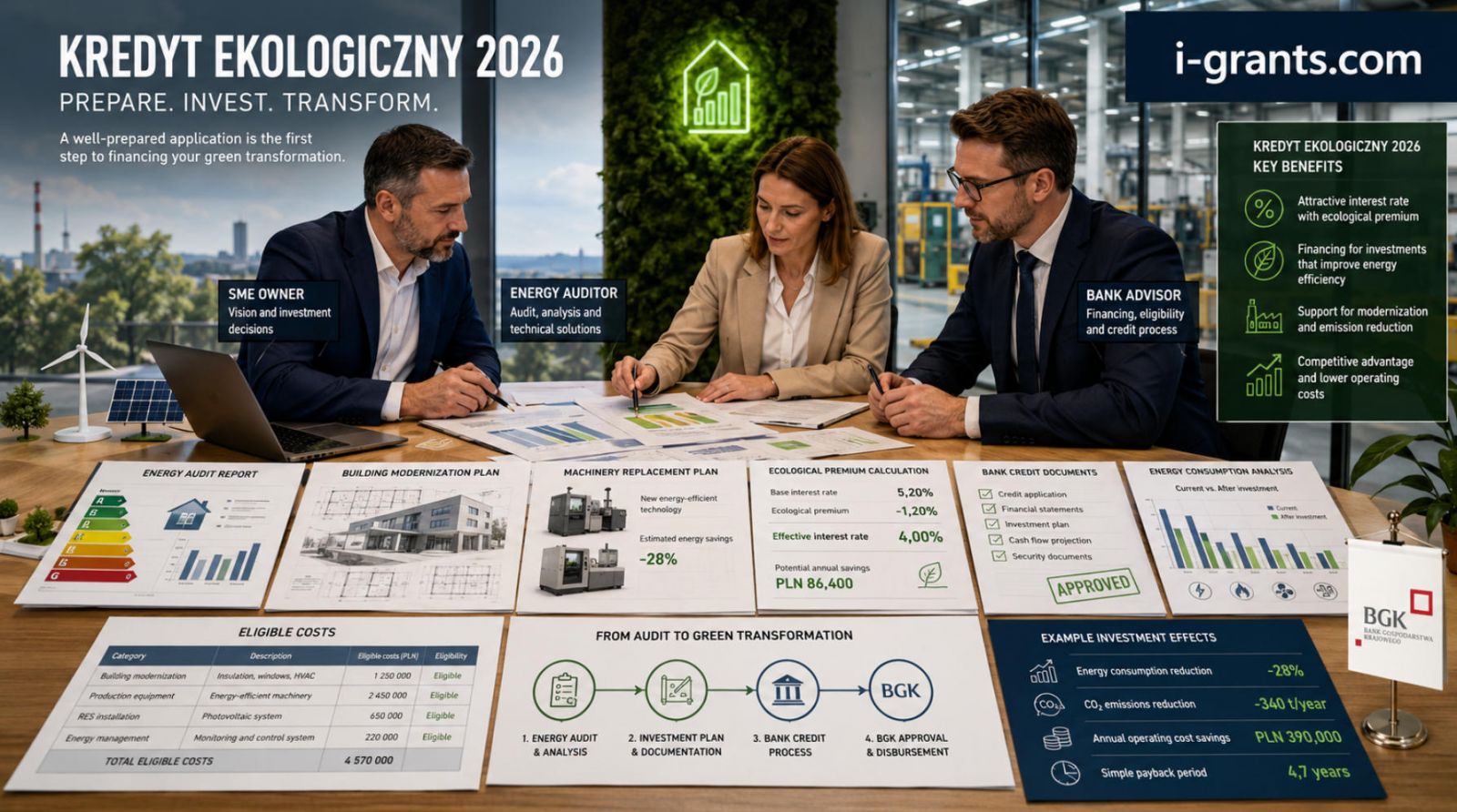
Table 3. Common mistakes in Kredyt ekologiczny applications
| Mistake | Why it is dangerous | How to reduce the risk |
|---|---|---|
| Treating the instrument as a simple grant | The programme is based on bank credit and ecological premium | Prepare both the grant application and bank financing path from the start |
| Preparing the energy audit too late | The audit shapes the energy-saving result and project logic | Commission the audit early and align it with the investment scope |
| Using the wrong bank | A credit promise must come from a cooperating bank | Verify the current list of banks before starting the credit process |
| Building a budget as a shopping list | Costs must be necessary for the ecological investment | Link each cost to the audit, technical scope, and expected energy saving |
| Assuming maximum support intensity | Support depends on cost type, company size, location, and aid rules | Model several financing scenarios before submission |
| Underestimating evaluation time | Recent calls involved complex assessment and extended timelines | Plan implementation, procurement, financing, and liquidity with a time buffer |
What recent calls show about competition
Recent calls confirm that Kredyt ekologiczny is highly competitive. In the fourth call, with an allocation of PLN 350 million, applicants requested more than PLN 2.2 billion in support. The declared investment costs exceeded PLN 4.1 billion. This shows that enterprises are actively seeking support for energy-efficiency investment and that available funds are limited compared with market demand.
The third call also showed strong demand. BGK received 693 applications for more than PLN 2.3 billion in support. The second call received 728 applications for more than PLN 1.5 billion in support, and 293 projects were recommended for support for a total amount of PLN 659,852,512.80. In that call, some projects met the criteria but were initially not recommended because the available allocation was insufficient. Later, the allocation was increased, allowing additional projects to receive support.
For SMEs, the lesson is practical. Passing minimum criteria may not be enough. A company should prepare the project so that it is competitive in substance, not only complete in form. Energy savings, cost efficiency, documentation quality, financing readiness, and consistency between the audit, budget, and application can all influence the final outcome.
How to build a stronger application
A strong Kredyt ekologiczny application begins with diagnosis. The company should identify where energy is being wasted, which assets should be modernised, whether the planned investment can deliver at least 30 percent reduction in primary energy consumption, and whether the savings can be proven through an audit. This should happen before the company builds the final budget.
The second step is to connect technical decisions with financial planning. The SME should understand the total investment cost, eligible and non-eligible parts, expected support intensity, own contribution, credit amount, repayment capacity, and liquidity needs. Since the ecological premium repays part of the credit capital, the timing of payments and reimbursements matters.
The third step is to prepare a coherent project story. The application should explain the current problem, the audited baseline, the planned modernisation, the expected energy savings, the eligible costs, the bank financing, and the business result. These elements should not appear as separate documents that contradict each other. They should support one logic.
The fourth step is to test whether the project is really competitive. If the energy saving is only just above the minimum threshold, if costs are high compared with savings, or if the bank financing is uncertain, the SME may need to improve the project before submission. In a heavily oversubscribed call, a technically eligible but weakly optimised project may lose to stronger applications.
When Kredyt ekologiczny may not be the right choice
Kredyt ekologiczny is not suitable for every green investment. A company should be cautious if it does not have creditworthiness, cannot document at least 30 percent primary energy savings, has no clear modernised area, wants to finance ordinary business expansion, or needs a grant without bank credit.
The instrument may also be difficult for very small companies that cannot manage a complex application, bank process, technical documentation, and investment implementation at the same time. That does not mean they should abandon energy efficiency. It may mean that a smaller regional grant, leasing without public support, an energy-efficiency advisory programme, or a phased investment plan is more realistic.
A professional grant strategy is not only about finding the largest available support. It is about matching the project with the right funding instrument. Kredyt ekologiczny can be powerful when the project has clear energy savings, strong financial capacity, and technical readiness. It can be risky when the investment is poorly documented or the company assumes that the premium will solve all financing problems.
Conclusion
Kredyt ekologiczny 2026 is one of the most relevant funding instruments for Polish SMEs planning energy-efficiency modernisation. It supports ecological investment through a combination of bank credit and ecological premium, helping companies reduce the capital burden of projects that lower primary energy consumption.
However, the programme should not be confused with a simple grant. The applicant must satisfy energy, grant, and banking requirements at the same time. The project needs a credible energy audit, a modernisation plan, eligible costs, bank financing, creditworthiness, and a clear link between the investment and primary energy savings.
Recent calls show that demand is very high and that available allocations can be heavily oversubscribed. This makes preparation essential. For SMEs, the strongest approach is to start with the energy audit, build the budget around measurable savings, engage a cooperating bank early, and prepare the application as an integrated investment case.
The central question is not only whether the company can apply. The better question is whether the planned investment can prove real energy savings, withstand bank assessment, and compete for limited public support. If the answer is yes, Kredyt ekologiczny can become a practical route from costly energy inefficiency to a more modern, resilient, and competitive business.