

 Français
  Deutsch
  Українська
Hiring a grant writer for German SME funding is not just a writing decision. It is a funding strategy decision.
A German SME may have a strong project, but still lose time or eligibility because the wrong programme was chosen, the project started too early, the budget was not aligned with eligible costs, the SME status was calculated incorrectly, or previous de minimis aid was not checked. In this context, a good grant writer is not only someone who writes persuasive text. The real value is the ability to turn a business idea into a fundable, compliant and well-documented application.
This matters because Germany’s SME landscape is large, diverse and administratively demanding. In 2024, Germany had around 3.52 million small and medium-sized enterprises, representing 99.2 per cent of all enterprises with turnover and/or employees. These SMEs employed around 21.8 million people and generated approximately EUR 2.80 trillion in annual turnover.
For applicants, this creates a competitive environment. For grant writers, it creates a responsibility: German SME funding requires much more than attractive wording.
When a German SME should hire a grant writer
A grant writer is most useful when the project is important, the programme is competitive, the documentation burden is high, or the consequences of a mistake are serious. For example, an SME applying for ZIM, BAFA energy efficiency support, a state-level digitalisation grant, GRW regional investment support, Eurostars, Horizon Europe, KfW-linked financing or a blended funding structure may need more than a simple application form.
The need is especially strong when the company has several possible funding routes. A machinery investment may fit a regional programme, a KfW promotional loan, a guarantee route or no public support at all. A digitalisation project may qualify for a state grant in one Land, but require loan financing in another. An innovation project may look like a grant case, but the realistic route may be ZIM, Eurostars, KMU-innovativ, EIC Accelerator or private co-financing.
A grant writer should help the SME answer one question before any writing begins: is this project actually suitable for the programme?
This matters because German funding is time-sensitive. KfW, for example, states that the ERP-Förderkredit KMU must be applied for through a financing partner before the project begins. It also explains that the loan is applied for through a financing partner, not directly with KfW. If the company signs contracts, places binding orders or starts the project too early, a good application text may no longer help.
What a grant writer should actually do
A weak grant writer sells text. A strong grant writer sells structure, judgement and process control.
For German SME funding, the role should usually include programme screening, eligibility checking, project logic, budget structuring, document coordination, application writing, portal preparation, deadline management and compliance warnings. The writer should also know when to involve a tax adviser, lawyer, accountant, energy consultant, bank, technical expert or managing director.
In EU research and innovation calls, the writer must understand evaluation logic. Horizon Europe proposals are scored on excellence, impact, and quality and efficiency of implementation. This means the application is not simply a story about a good project. It must answer the funder’s scoring logic with evidence, work packages, implementation capacity, measurable outcomes and credible risk management.
For German SME programmes, the same principle applies in a more practical way. The application should connect the project to the programme purpose, show why the company is eligible, prove that the costs are justified, demonstrate that the timeline is compliant and explain why public support is necessary.
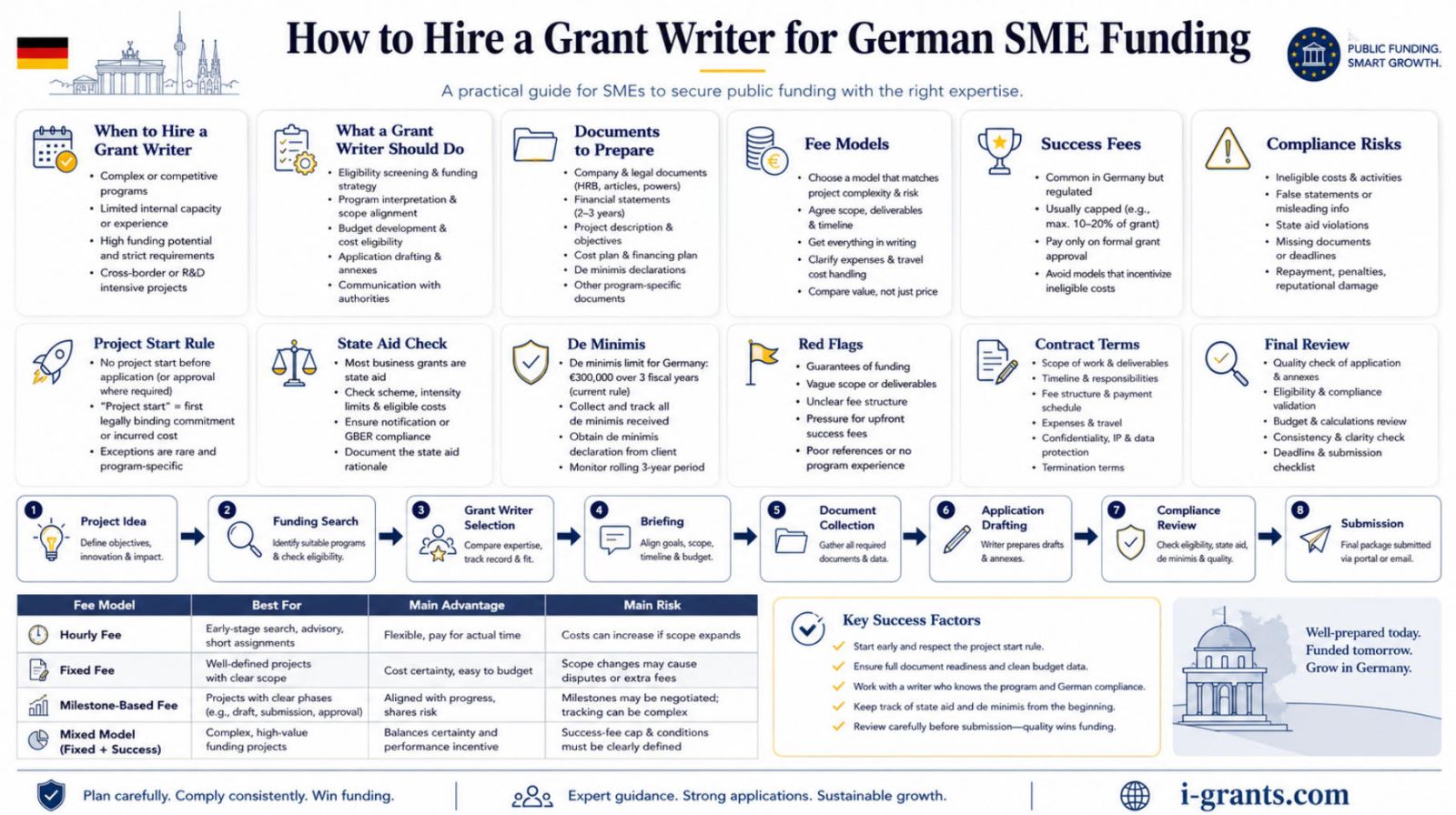
Table 1. Documents a German SME should prepare before briefing a grant writer
| Document area | What the company should prepare | Why the grant writer needs it |
|---|---|---|
| Company identity | Register extract, legal form, address, VAT details, ownership structure | To check applicant identity, location, group structure and basic eligibility |
| SME status | Headcount, annual turnover, balance sheet total, partner and linked companies | To verify whether the company meets SME rules and programme thresholds |
| Financial position | Annual accounts, BWA, liquidity plan, tax documents, current liabilities | To assess financial capacity, own contribution and repayment ability where relevant |
| Project description | Objective, problem, target users, expected results, project location and timeline | To match the project to the right programme and write a coherent application |
| Cost evidence | Supplier offers, equipment lists, personnel cost estimates, service quotes | To build an eligible and defensible budget |
| Funding history | De minimis certificates, previous grants, KfW documents, regional support | To check cumulation, state aid exposure and documentation duties |
| Project start status | Signed contracts, purchase orders, deposits, delivery dates, planned start | To avoid losing eligibility through premature project start |
| Technical evidence | Technical specifications, energy data, innovation description, digitalisation plan | To support specialist programmes such as ZIM, BAFA EEW, digitalisation calls or EU R&D funding |
How much does a grant writer cost in Germany?
There is no single official fee scale for grant writers or Fördermittelberater in Germany. A German consulting overview notes that there are no generally binding tables or fee regulations for this type of service, and that market practice includes time-based fees, success-based fees and mixed models.
Market examples vary widely. One consulting source describes hourly rates of around EUR 150 to EUR 250 as common for funding advisory work and mentions success-based fees that often fall between 3 per cent and 15 per cent of the grant amount, with higher cases also possible. Another public price list from a funding advisory provider shows how one firm combines effort-based fees and success-based remuneration, with the fee due after application submission or after the grant award decision, depending on the model. These examples should be treated as market illustrations, not as official tariffs.
The price should depend on the complexity of the application, the number of partners, the technical depth, the budget size, the number of attachments, the expected communication with the funder, and whether the consultant only writes the application or also supports reporting after approval.
For a small local grant, a fixed price may be reasonable. For a competitive innovation proposal, an hourly or hybrid model may be more realistic. For a multi-partner EU proposal, the price should reflect coordination, proposal architecture, partner inputs, work packages and revision cycles.
Table 2. Common fee models for grant writers and funding consultants
| Fee model | How it works | When it can fit | Main risk |
|---|---|---|---|
| Hourly fee | The SME pays for actual time spent | Early-stage screening, complex applications, document-heavy work | Costs can expand without a cap or estimate |
| Fixed fee | The SME pays an agreed amount for a defined application scope | Clear programme, clear deadline, predictable documents | Deliverables must be defined precisely |
| Monthly retainer | The SME pays a monthly fee for ongoing funding search and support | Companies with several projects or repeated applications | Poor value if there is no work plan or reporting rhythm |
| Success fee | Payment depends on approval, award or payment of funding | May reduce initial cost for the applicant | Can create conflicts of interest or unrealistic promises |
| Hybrid model | A lower fixed fee is combined with a success component | When both parties want to share part of the risk | The definition of “success” must be exact |
| Grant readiness audit | One-time review of eligibility, project fit and documents | Before deciding whether to apply | It does not replace a full application |
Success fees: useful tool or compliance risk?
A success fee can be attractive because the applicant pays less upfront. It may also show that the consultant has confidence in the project. But it needs careful handling.
The first issue is definition. Does success mean submission, formal eligibility, invitation to the next stage, award decision, signed grant agreement or actual payment? Each option creates different incentives. A consultant paid only after approval may push the applicant toward programmes with easier approval but weaker strategic fit. A consultant paid after submission may have less incentive to support clarifications or revisions.
The second issue is eligibility of costs. Many programmes do not automatically allow the cost of application preparation to be paid from the grant. The SME should never assume that a success fee can be included in the funded budget unless the programme rules clearly allow it. If the fee is not eligible, it should be paid from the company’s own funds.
The third issue is ethics and conflict of interest. A consultant who promises “guaranteed funding” or asks for a high success fee without checking eligibility, state aid, project start date and budget evidence is creating risk for the applicant. A serious grant writer can estimate chances, explain evaluation criteria and identify weaknesses. They should not guarantee a public funding decision.
Can BAFA pay for the consultant?
Some SMEs ask whether German consulting support can finance the cost of a grant writer. The answer is: sometimes related consulting may be subsidised, but a company should not assume that a grant writer is automatically covered.
BAFA’s programme “Förderung von Unternehmensberatungen für KMU” supports consulting for SMEs and applies to grant applications submitted from 1 January 2023 until 31 December 2026. During the programme period, each eligible company can receive support for a maximum of five separate consulting projects, but not more than two per year. BAFA states that the programme is intended to strengthen SMEs’ success prospects, performance, competitiveness, employment capacity and adaptability, and that companies can receive advice on economic, financial, personnel and organisational management questions.
However, this does not mean that every grant-writing fee is subsidised. The SME should check the current BAFA rules, consultant eligibility, timing and the exact scope of work before treating advisory funding as part of the financing plan. BAFA also states that companies may only start the consulting after receiving the relevant information letter, and that concluding the consulting contract already counts as the start of the consulting.
This is a useful lesson for all funding work: timing is not an administrative detail. It can determine eligibility.
How to brief a grant writer properly
A poor briefing produces poor applications. A good briefing helps the writer identify whether the project is realistic, which programme fits, what evidence is missing and what must be clarified before submission.
The first briefing should cover the company, ownership structure, location, sector, project purpose, expected costs, planned start date, previous public support, available internal capacity and decision-maker availability. The grant writer should ask direct questions about what has already happened. Has the company signed a contract? Paid a deposit? Ordered equipment? Started implementation? Received previous de minimis aid? Applied for similar support before? Been rejected?
A strong briefing should also clarify the business reason for the project. “We want a grant” is not enough. The project should have a commercial or operational logic: lower energy consumption, new product development, production expansion, business succession, digital process improvement, export readiness, research cooperation or regional investment.
The best grant writers do not only ask for text. They ask for evidence.
Compliance risks the applicant must not outsource blindly
The applicant remains responsible for the truthfulness of the application. A consultant can draft, structure and challenge the information, but the company must verify facts, numbers and declarations.
This is especially important in Germany because false or incomplete information in subsidy matters can have serious legal consequences. Section 264 of the German Criminal Code, StGB, on subsidy fraud provides for imprisonment of up to five years or a fine in the basic case. This does not mean that every mistake is a crime. It does mean that applicants should treat subsidy-relevant facts seriously.
The most sensitive areas are SME status, partner and linked companies, project start date, eligible costs, de minimis declarations, state aid cumulation, financial capacity, ownership, prior support, procurement documents, technical claims, environmental performance and project results. If the grant writer fills in these sections, the company should still review and approve them before submission.
For EU-funded projects, procurement and subcontracting can also matter after approval. If the same consultant later becomes a project manager, subcontractor, reporting expert or implementation partner, the company should check conflict of interest rules and value-for-money principles before awarding that role.
How to compare grant writers
A good selection process should test programme knowledge, not just writing style. The SME should ask candidates which German funding programmes they have worked with, what types of companies they usually support, how they check eligibility, how they handle state aid and how they define the scope of their work.
Experience should be specific. “We work with grants” is not the same as experience with ZIM cooperation projects, BAFA EEW energy efficiency funding, GRW investment support, Digitalbonus programmes, KfW loans, Horizon Europe or EIC Accelerator. The more specialised the programme, the more important it is to ask for relevant examples.
The SME should also evaluate communication. A strong grant writer explains risks early, asks uncomfortable questions, gives a realistic document list, refuses to promise guaranteed approval and can explain why a project may not be suitable for a programme. This is often more valuable than a consultant who immediately says yes.
Red flags include guaranteed funding promises, pressure to sign quickly, unclear pricing, no written scope, no question about project start, no check of previous aid, no discussion of SME status, no ownership of revision rounds, no clarity on who submits the application and no agreement on access to final files.
What should be in the contract?
The contract does not need to be complicated, but it should remove ambiguity. It should state the programme or funding route, the exact scope of work, the deliverables, the timeline, the fee model, the number of revision rounds, confidentiality rules, portal access, data responsibility, payment dates and what happens if the programme deadline changes.
It should also clarify who is responsible for technical data, financial statements, supplier offers, tax information, ownership information and final approval of the application. The grant writer should not be expected to invent missing facts. The applicant should not assume that the consultant carries responsibility for information the company supplied.
If the fee includes a success component, the contract should define success precisely. It should explain whether the success fee is based on the approved grant, the paid grant, the loan amount, the guarantee amount, the subsidy equivalent or another calculation. It should also state whether VAT applies and when the fee becomes due.
Finally, the company should secure the right to receive all final files: the application text, budget tables, attachments, submitted PDFs, calculations, correspondence summaries and reporting notes. These documents may be needed for audits, amendments, reporting, future applications or bank discussions.
A practical hiring sequence
The safest approach is to start with a small diagnostic step before committing to full application writing. The SME can first ask for a funding fit review, eligibility check or grant readiness audit. If the result is positive, the same expert can proceed to the full application. If the result is negative, the company avoids wasting time and protects its credibility.
This is particularly important because German SMEs often combine several financing instruments. KfW’s SME Panel 2025 found that 615,000 SMEs used bank loans to finance investments in 2024, with total bank loans for investment financing of around EUR 81 billion. It also reported that 67 per cent of investment loan negotiations were successful and that more than 96 per cent of SMEs had sufficient debt servicing capacity. A grant writer who understands only grants may miss the better route: a promotional loan, guarantee, investment subsidy, advisory support or blended financing structure.
For many SMEs, the best funding adviser is not the person who writes the longest application. It is the person who helps the company choose the right route before the deadline and before the project starts.
Conclusion
Hiring a grant writer for German SME funding should be treated as a professional procurement decision. The applicant is buying judgement, programme knowledge, process discipline and compliance awareness, not only writing time.
A good grant writer will challenge the project, test eligibility, identify missing documents, align the application with the programme logic, structure the budget and warn the company before it makes timing or compliance mistakes. A weak one will promise easy money, copy templates and ignore the facts that determine eligibility.
For German SMEs, the best result is not just a submitted application. It is a funding route that fits the business, survives formal checks, supports the project and does not create avoidable legal or financial risk.
For grant writers and funding consultants, the lesson is equally clear. The most valuable service is not writing what the applicant wants to hear. It is helping the applicant build a fundable, truthful and compliant case.